A Very Brief History of Burlesque
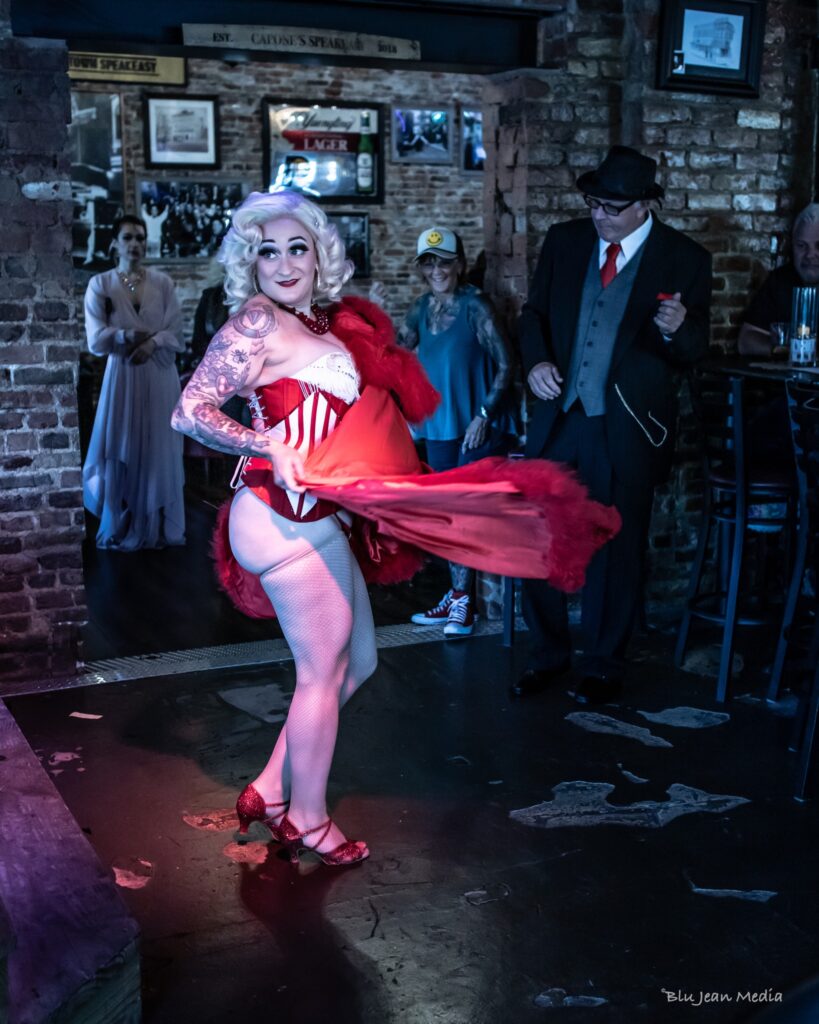
Americans were first introduced to burlesque by Lydia Thompson and her “British Blondes” when they appeared in New York in 1868.The show was an instant smash hit with audiences and a scandalous outrage to others. Although difficult to pin down, burlesque has always been a mix of comedy, satire, sexuality, and music. Its slippery nature also made it so appealing to audiences, especially when seeking entertainment and escapism. Due to its success, Lydia’s show was imitated almost immediately and predominantly by other women. It has continued to be primarily driven by women.
In 1893 Little Egypt appeared at the Chicago World’s Fair dancing the “hoochie coochie” at the Algerian Village on the Midway Plaisance. She was one of the Fair’s most popular attractions and probably also one of its most derided. Fast-forward to the 1920s where there were major vaudeville circuits performing burlesque in addition to the introduction of motion pictures. The Ziegfeld Follies and Minsky’s shows both profited hugely from producing burlesque shows. The Great Depression brought the rise of burlesque when audiences packed houses for affordable entertainment and plenty of young women in need of work. Sally Rand and her feather fans, Josephine Baker’s sensuality and subversion, Gypsy Rose Lee’s wit and humor, and Ann Corio, the big tease, all became well-known during this time. Carrie Finnell also brought pasties and tassel-twirling into permanent rotation. (Pun intended!)
By the 1940s, censorship had its jaws locked on burlesque. Theaters were more frequently raided and strippers fined and/or jailed. By the 1950s some dancers were still working in towns and theatres hospitable to burlesque, but many had moved on or moved to Hollywood to try their luck in the movies. These decades ushered in the slow decline of burlesque.
The 1960s brought more changes. As films became more explicit, a coy striptease became less entertaining which ushered in a demand for more raunch and more nudity. Comedians and other vaudevillian elements of the show had all but disappeared and shows moved from theaters to nightclubs. The sexual revolution and second wave of feminism also contributed to the decline of burlesque. As America entered the 1970s, audience interaction became a central element to nightclub performances and burlesque entertainment began to evolve into what we recognize as modern strip clubs. Despite not being what it once was, burlesque endured. Many performers worked as feature dancers in clubs throughout the late 20th century.
The Neo Burlesque revival began in the 1990s. It reengineered some of the classic burlesque tropes highlighting feminism, social commentary, and performance art. Pioneering performers such as Dirty Martini, Dita Von Teese, and Tigger! are active today. Its popularity continued to rise steadily into the early 2000s. Modern burlesque has a strong DIY component and continues to evolve, often incorporating elements of other performances such as drag, circus skills, and puppetry–there are no limits to the ways in which we can surprise and delight our audiences.
Other resources
“Archives Unveiled: A Journey Through the Real History of Burlesque”. (webinar, The Ohio State University Libraries, May 9, 2025), https://www.youtube.com/watch?v=WlbLr8cz0LI
“Burlesque show”. Brittanica. https://www.britannica.com/art/burlesque-show
Bardeaux, Bebe. “Black Burlesque History Timeline”. Bebe Bardeaux. 2021-2025. https://www.bebebardeaux.com/post/black-burlesque-history-timeline-1880-1929-part-i
Loose Women in Tights. The Ohio State University. https://library.osu.edu/loose-women-in-tights
PBS NewsHour. “The History of Performers of Color in Burlesque”. Video, 6:45 min. August 8, 2015. https://www.youtube.com/watch?v=6obH-40-zsY
Regehr, Kaitlyn. “The History of American Burlesque”. OUP Blog. June 28, 2017. https://blog.oup.com/2017/06/burlesque-history-timeline/
Zemeckis, Leslie. Behind the Burly Q. New York: Skyhorse Publishing, 2014.